.webp)
SAP BASIS Course (2026): Eligibility, Syllabus, Fees & Career Guide
 Pallavi SaxenaMar 31, 20265,719 views13 min read
Numerous organisations, from Small Manufacturers to Global Banks, run their business on SAP. Finance, HR, Supply Chain, Procurement — all of it flows through this one powerful platform. And quietly, behind every single one of those SAP Systems, an SAP BASIS Administrator is making sure everything stays up, secure, and running seamlessly.
SAP BASIS is one of the most in-demand, well-paid, and future-proof positions in enterprise IT right now. If you have been wondering whether an SAP BASIS Course is the right next step for you. As a fresh graduate or an IT Professional Looking to upskill, or professionals switching careers, this guide will walk you through everything. What SAP BASIS actually is, the eligibility criteria, the full syllabus, career opportunities, and salary benchmarks.
What is SAP ERP?
SAP ERP (Enterprise Resource Planning) is an integrated software suite that helps organisations manage finance, supply chain, manufacturing, sales, human resources, and more on a single platform. Developed by a SAP Software Engineer, it connects business processes across departments and geographies, enabling real‑time data visibility and fast decision‑making. For students and professionals, understanding SAP ERP is the first step toward mastering domain‑specific modules like FICO, SD, MM, HR, and the technical backbone: SAP BASIS. This foundation is why SAP certification remains a highly valued credential in the IT and consulting world.
SAP Basis Walk Through
SAP BASIS is the technical core that keeps SAP systems running. It covers system installation, configuration, monitoring, performance tuning, user management, transports, backups, and security. A typical SAP BASIS course trains learners to act as an SAP Basis Administrator or Consultant who ensures that SAP applications remain stable, secure, and optimised for business users. With the rise of SAP S/4HANA, BASIS skills are now linked to cloud‑ready, HANA‑centric environments, making this path especially attractive for IT professionals and those switching into SAP from non‑functional roles.

Significance of SAP BASIS
- Mission‑Critical Backbone: Nearly every large manufacturing, retail, pharma, and banking runs SAP ERP on a BASIS‑managed infrastructure, so SAP Basis Experts are indispensable for uptime and overall performance.
- Cloud & S/4HANA Boom: SAP’s shift to Cloud and S/4HANA has increased demand for BASIS Administrators who can handle HANA databases, landscape management, and hybrid setups.
- Zero‑Downtime Operations: BASIS professionals ensure smooth upgrades, patching, and transports, minimising business disruption—a top priority for modern enterprises.
- Integration Hub: SAP BASIS layers connect SAP with other systems (CRM, Ariba, SuccessFactors), making BASIS skills central to enterprise integration strategies.
Advantages of Learning SAP BASIS
- High Demand, Low Competition: Compared to Functional Modules, fewer people master SAP BASIS, which creates a niche with strong hiring demand and fewer applicants.
- Global Portability: SAP BASIS roles are valued in India, Europe, the US, the Gulf, and Southeast Asia, so certified professionals can work for multinational projects or relocate.
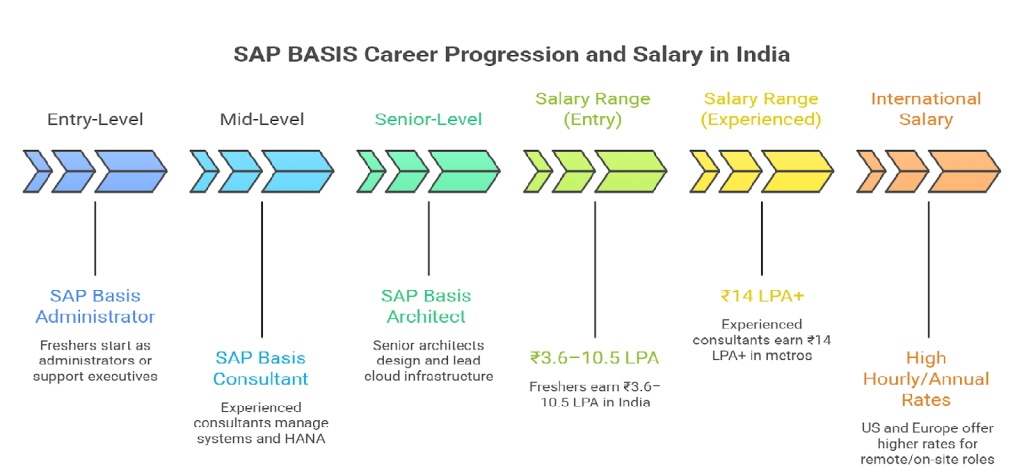
- Strong Starting Salary: Freshers in SAP BASIS can expect packages in the range of approximately ₹3.6–10.5 LPA, with experienced consultants earning around ₹14 LPA or more, depending on location and project complexity.
- Career Longevity: As long as SAP systems run, BASIS administrators will be needed; this makes the role recession‑resilient and future‑proof.
- Fast Entry into SAP: With the right SAP BASIS course, even non‑SAP professionals can enter the SAP ecosystem within a few months, without needing deep domain knowledge in finance or operations.
Thinking About Learning SAP
Who can do the SAP BASIS course?
A SAP BASIS course is suitable for a wide range of learners, including:
- B.Tech / B.E. / B.Sc. (IT/CS) graduates looking for a technical SAP career.
- MCA / M.Sc. (Computer Science) students wanting to align with enterprise‑level system administration.
- MBA / B.Com / other graduates who already work in IT support, helpdesk, or desktop support and want to move into SAP.
- Working Professionals in IT support, database, or networking roles who aim to switch to SAP BASIS consulting or administration.
- Career Switchers from non‑IT domains who have basic computer literacy and are ready to invest time in learning SAP system administration.
Most reputable institutes require a graduation degree and basic computer skills; prior SAP experience is helpful but not mandatory. Specialised SAP BASIS training providers also offer bridge content for non‑SAP professionals, making the learning curve smoother.
What is the SAP BASIS Course?
An SAP BASIS course is a structured professional training programme designed to teach learners how to install, configure, administer, and maintain SAP systems. It covers the technical administration of SAP landscapes — including client-server architecture, transport management, system monitoring, performance tuning, user administration, and integration with databases and operating systems.
The SAP BASIS course details typically span both theoretical concepts and hands-on practical work. You will learn to work directly with SAP tools such as SAP GUI, SAP Solution Manager, CCMS, and more.
The SAP BASIS Course Duration generally ranges from 40 to 80 hours of instructor-led training, spread across 1 to 3 months, depending on the institute and pace of learning.
Eduwatts: No. 1 Institute of SAP Professional Training

Eduwatts has emerged as one of India’s top institutes for SAP professional training, known for its high‑quality SAP BASIS Training Course and strong placement support. The institute partners with industry‑aligned platforms like Kodakco and offers updated, practical SAP curricula that reflect current market demands.
What sets Eduwatts apart is its focus on hands‑on learning, experienced trainers, and 100% placement assistance, which helps students and working professionals transition smoothly into SAP roles. The institute also provides a one‑year subscription to an advanced LMS, along with project‑based training and exam support, making it a preferred choice for those seeking a SAP BASIS course online with certification and placement. Given its high ratings and success stories, Eduwatts is widely regarded as the No. 1 institute for SAP Professional Training in many rankings.
SAP BASIS TRAINING COURSE
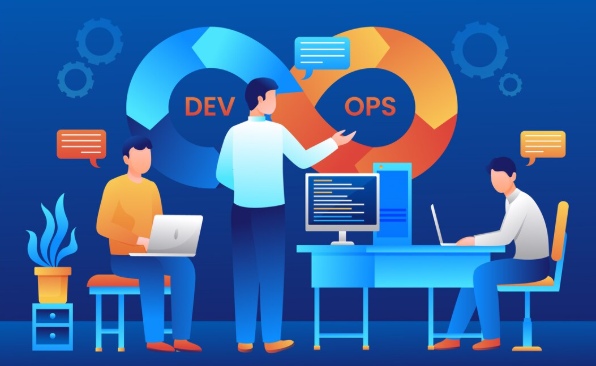
Our SAP BASIS Training Course is designed to convert beginners and working IT professionals into job‑ready SAP Basis Administrators. The course covers core topics such as SAP system architecture, installation and configuration, user and role management, transports via TMS, performance monitoring, backup and recovery, and security. Learners gain practical exposure through live projects, real‑time case studies, and access to industry‑standard SAP environments, which enhances their confidence while working in live client setups. Academically, the training follows an updated SAP BASIS course syllabus aligned with SAP S/4HANA and HANA‑centric landscapes, ensuring relevance in today’s market.
Career Benefits
- SAP BASIS Certification: One of the most recognised credentials for SAP technical professionals in the industry.
- Dedicated Placement Support: Connecting learners with openings in top companies, including EY, Deloitte, IBM, Microsoft, Wipro, and Tech Mahindra.
- Guaranteed Internship: To bridge the gap between training and your first professional SAP experience.
- SAP BASIS Exam Assistance: To help you prepare for and clear the official SAP certification examination with confidence.
- 1-Year Gold Membership: With lifetime access to e-learning materials, ensuring your skills stay current long after course completion.
- 100% Practical Training Approach: Ensures your resume reflects skills that hiring managers actively look for in SAP BASIS administrators.
SAP BASIS Course Eligibility
SAP BASIS Course eligibility criteria are fairly inclusive. The course is open to a wider range of backgrounds than many people assume.
Educational Qualification: A bachelor’s degree in any discipline, B.Tech, B.Sc (IT/CS), BCA, BBA, B.Com, or even arts Graduates — can enrol in an SAP BASIS course.
A degree in computer science or information technology is beneficial but not mandatory.
Work Experience: Freshers straight out of college can pursue SAP BASIS training. Working professionals with 1–5 years of experience in IT, system administration, networking, or database management will find the learning curve much smoother.
Technical Awareness: A basic understanding of operating systems (Windows/Linux), databases (Oracle, SQL Server), and networking concepts gives learners a strong head start, though many institutes teach these fundamentals as part of the course.
Career Switchers: Professionals from non-IT fields who have completed a basic IT certification or have relevant functional SAP module experience are also welcome to pursue SAP BASIS training.
Age & Location: There is no age restriction. Thanks to the availability of SAP BASIS course online formats, learners from anywhere in India or abroad can enrol and learn flexibly.
SAP BASIS Course Syllabus
A standard SAP BASIS course syllabus includes:
- Introduction to SAP ERP and SAP architecture (presentation, application, database layers).
- SAP installation and post‑installation activities, client administration, and system parameter tuning.
- User and role management, SAP authorisations, and security basics.
- Transport Management System (TMS) and Change Requests.
- Performance monitoring, spool and background jobs, backup and recovery strategies.
- Support packs, kernel upgrades, and basic troubleshooting scenarios.
- Introduction to SAP S/4HANA and SAP HANA basics (in advanced or S/4HANA‑focused courses).
SAP BASIS Course Duration and Fees in India
| Course Type | Duration | Fees (INR) | Mode |
| Basic SAP BASIS Training | 1 – 2 Months (45–60 days) | ₹20,000 – ₹35,000 | Online / Classroom |
| Standard SAP BASIS Course | 2 – 3 Months (60–75 days) | ₹30,000 – ₹60,000 | Online / Offline |
| Advanced SAP BASIS Course | 3 – 6 Months | ₹60,000 – ₹1,20,000 | Instructor-led / Hybrid |
| SAP BASIS Certification Program | 2 – 4 Months + Exam | ₹1,50,000 – ₹3,00,000 (including certification) | Official / Premium Institutes |
| Fast-Track SAP BASIS Course | 1 Month | ₹25,000 – ₹45,000 | Intensive Online |
Ready to Start Learning SAP
SAP BASIS Career Opportunities and Salary
On completion of the course, SAP BASIS offers a wide range of job roles in India and globally:
- Entry‑Level Roles: SAP Basis Administrator, SAP Support Executive, Junior SAP Basis Consultant.
- Mid‑Level Roles: SAP Basis Consultant, SAP HANA Administrator, SAP System Administrator.
- Senior Roles: SAP Basis Architect, SAP Basis Team Lead, SAP Cloud Infrastructure Manager.
| Career Level | Job Roles | Average Salary in India (INR) | Experience Level |
| Entry-Level Roles | SAP Basis Administrator, SAP Support Executive, Junior SAP Basis Consultant | ₹3.6 – ₹10.5 LPA | 0 – 2 Years |
| Mid-Level Roles | SAP Basis Consultant, SAP HANA Administrator, SAP System Administrator | ₹6 – ₹14 LPA | 2 – 5 Years |
| Senior Roles | SAP Basis Architect, SAP Basis Team Lead, SAP Cloud Infrastructure Manager | ₹14 – ₹25+ LPA | 5+ Years |
SAP BASIS professionals can pursue roles across a rich landscape of positions and sectors. Key job titles include: SAP BASIS Administrator, SAP Basis Consultant, SAP System Administrator, SAP Technical Consultant, SAP Landscape Manager, SAP NetWeaver Administrator, and SAP Cloud Administrator.
Industries actively hiring for these roles include IT services and consulting firms, banking and financial services, pharmaceuticals and life sciences, retail and consumer goods, oil and gas, automotive manufacturing, and public sector organisations. Top employers in India for SAP BASIS jobs include Infosys, Wipro, TCS, HCL Technologies, Capgemini, Cognizant, Accenture, IBM India, Tech Mahindra, and hundreds of direct SAP-using enterprises. For those open to relocation, SAP BASIS professionals are in high demand in the US, UK, Germany, the UAE, Singapore, and Australia.
SAP BASIS CAREER PATH
Tips to Succeed in SAP BASIS Career
To build a successful career in SAP BASIS:
- Focus on strong technical fundamentals
- Practice regularly
- Gain hands-on experience
- Stay updated with SAP trends
- Earn certifications
- Work on real-time projects
Consistency and dedication are key to long-term success.
Future Scope of SAP BASIS in India
The future scope of SAP BASIS in India remains strong due to the widespread use of SAP ERP and the rapid adoption of SAP S/4HANA in large enterprises. As more companies migrate to cloud‑based and HANA‑driven SAP landscapes, the demand for BASIS administrators who can manage hybrid environments, automate tasks, and ensure security will continue to grow.
India’s IT services sector already deploys thousands of SAP BASIS professionals for on‑site and offshore projects, and this trend is expected to expand with digital transformation and AI‑integrated SAP systems. For students and career switchers, this means long‑term job security, multiple upskilling paths (HANA, cloud, security), and attractive SAP Basis career opportunities and salary bands in the years ahead.
Talk to a SAP Course Expert
Conclusion
The SAP BASIS course is one of the most strategically valuable investments a technology professional or aspiring IT graduate can make today. It sits at the intersection of high demand, competitive salaries, global career mobility, and long-term job security. Whether you are a fresh graduate eager to enter enterprise IT, an IT professional looking to specialise, or a career switcher seeking a credible new direction, SAP BASIS training offers a clear and rewarding path forward.
With the right guidance from an institution like Eduwatts — which combines experienced instructors, practical project work, placement support, and globally recognised certification — your journey from learner to certified SAP BASIS professional can be a success. You can move forward in your SAP Career with high salaries.
Recommended Reads
- SAP Course Fees & Certification Costs in India
- SAP Consultant: Roles, Types, Skills & Salary Guide
- Top SAP Training Institute to Start a High-Tech Career
- SAP FICO Online Training with Certification & Placement Support
- SAP Course Duration in India: Module-Wise Time & Fees Details
- What is the Difference Between SAP Functional Modules and Technical Modules?
FAQs
Q1. What is the SAP BASIS Course?
Ans. The SAP BASIS course trains learners to install, configure, monitor, and maintain SAP systems. It focuses on the technical infrastructure of SAP ERP and S/4HANA, including user management, transports, performance tuning, and security, making it ideal for IT‑oriented professionals and career switchers seeking a stable SAP role in India and abroad.
Q2. What is the eligibility for the SAP BASIS Course?
Ans. Most institutes require a graduation degree in any discipline and basic computer literacy. Candidates from B.Tech, B.E., BCA, MCA, B.Sc. IT, MBA, or B.Com backgrounds are eligible. Prior SAP experience is helpful but not mandatory, and many training providers offer beginner‑friendly content to help non‑SAP professionals start from scratch.
GENERAL QUESTION ON SAP BASIS
Q3. How long is the SAP BASIS course duration?
Ans. Typically, an SAP BASIS course runs for about 40–60 hours of instructor‑led training, plus additional practice time on SAP systems. The duration may vary slightly across institutes, but most classroom and online formats are designed to be completed within 6–10 weeks, allowing working professionals to balance learning with their current jobs.
Q4. What are SAP BASIS career opportunities and salary in India?
Ans. In India, SAP BASIS professionals can work as Basis Administrators, Consultants, HANA Administrators, and Cloud Administrators. Freshers often earn between ₹3.6–10.5 LPA, while experienced consultants can reach ₹14 LPA or more, depending on city, company, and project complexity. These roles are available in IT Services, Manufacturing, BFSI, and Retail sectors.
Q5. What is the future scope of SAP BASIS in India?
Ans. The future scope of SAP BASIS in India is strong due to the ongoing migration from traditional SAP ERP to S/4HANA and cloud‑based systems. Enterprises need BASIS administrators for system stability, performance tuning, security, and cloud integration. With continuous digital transformation, SAP BASIS offers long‑term career growth, multiple upskilling paths, and global job opportunities.
Ready to Start Your Learning Journey?
Join thousands of learners and build your future with expert-led courses and 100% practical training.

Pallavi Saxena
With over 15+ years of experience, I am working as an SEO Content Creator in different domains. My expertise spans a diverse range of industries, including technology, AI, Data Science, Languages, Healthcare, manufacturing, finance and more. As an SEO blog writer, I pen down words that give updated information as per industry innovation, upgradation and technological advancements. My passion lies in crafting compelling content that engages and motivates my readers.
View all articles